Finding the Cause and Treating Pain: Understanding the Path to Relief
Chronic pain is a debilitating condition that affects millions of people across the United States. Recent data from the National Center for Health Statistics reveals that as of 2023, 24.3% of U.S. adults reported experiencing chronic pain in the past three months, while 8.5% suffered from high-impact chronic pain that significantly limited daily activities and work.¹ This highlights the growing need for effective strategies to manage and treat pain, which often affects every aspect of a person’s life—from work and family responsibilities to overall well-being.
Pain can stem from injured tissue, inflammation, or functional impairments, but no matter the cause, the nervous system plays a critical role in how pain is processed and felt. Chronic pain not only affects the body but also the mind and soul, creating a profound impact on a person’s quality of life.
Understanding How Pain Travels: The Pain Pathway
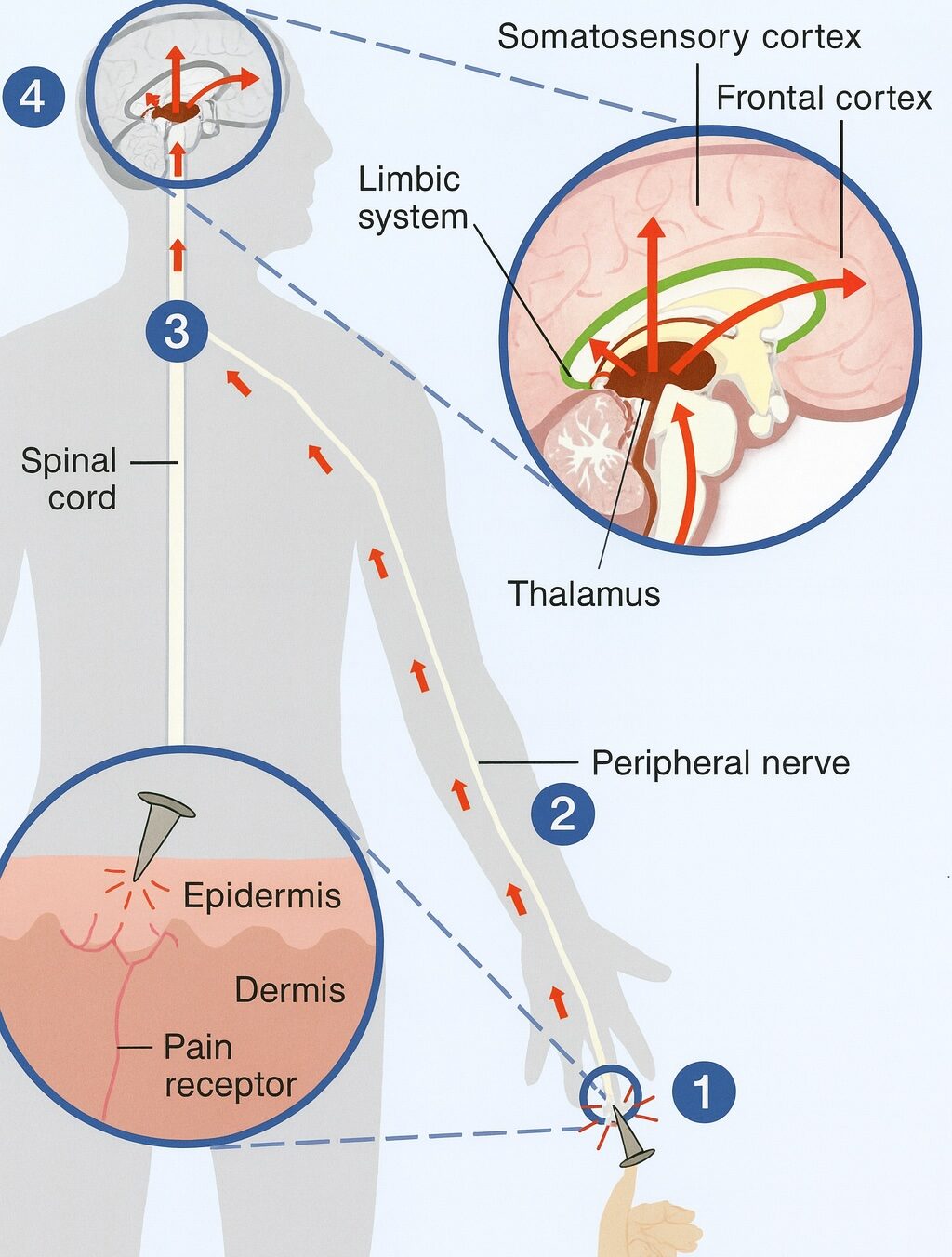
Pain begins when specialized pain receptors, called nociceptors, detect an injury or tissue damage and send a message through the nervous system. Here’s how the process works:
- Activation: When tissue is damaged (e.g., from a broken bone), nociceptors are activated and transmit a pain message.
- Transmission: The pain signal travels up the peripheral nerves to the spinal cord.
- Communication: In the spinal cord, neurotransmitters pass the pain signal to other nerves, sending it to the brain.
- Interpretation: The brain’s thalamus processes the signal, relaying it to the somatosensory cortex (where the sensation is felt), the frontal cortex (where it is analyzed), and the limbic system (which triggers an emotional response, such as crying).
This intricate communication system explains why pain can be overwhelming and challenging to treat, particularly when it becomes chronic or intractable.
Acute pain is sudden and short-term, such as the pain felt when you stub your toe or break a bone. It typically fades as the body heals, but if not treated properly, acute pain can sometimes develop into chronic pain.
Chronic pain is defined as pain lasting most days or every day for over three months. It often persists even after an injury has healed or can arise from ongoing medical conditions such as arthritis, cancer, fibromyalgia, or neuromuscular complications. Chronic pain can heighten sensitivity to pain over time, making it harder to manage.
Intractable pain (IP) is a severe form of chronic pain that is particularly difficult to treat. Unlike other types of pain, intractable pain often doesn’t have an obvious cause and is resistant to traditional treatments. It is constant, excruciating, and debilitating, interfering with sleep, raising blood pressure, and impacting cognitive function.
Treating Pain with Electric Cell Signaling Technology (EcST)
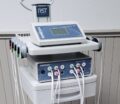
Managing chronic and intractable pain requires innovative approaches, and Electric Cell Signaling Technology (EcST) offers a promising solution. Delivered through the advanced neoGEN® System, this FDA-cleared treatment provides a safe, non-invasive, and non-opioid approach to pain relief.
Additional benefits include:
- Relaxation of muscle spasms, alleviating stiffness and tension.
- Re-education of neuromuscular pathways, restoring muscle function.
- Maintenance or improvement of range of motion, helping patients regain mobility.
- Prevention of disuse atrophy, preserving muscle strength during periods of immobility.
With 20 customizable programs, the neoGEN® System can be tailored to the unique needs of each patient, enhancing pain management, improving rehabilitation, and promoting better outcomes.
A Brighter Future for Patients with Chronic and Intractable Pain
The prevalence of chronic pain in the U.S. continues to grow, underscoring the importance of effective and innovative treatments. The neoGEN® System offers patients and providers a revolutionary option for managing pain naturally and non-invasively. By targeting pain at its source, this cutting-edge technology provides relief while supporting the body’s recovery process.
For patients, relief from chronic or intractable pain can mean a return to activities they once thought impossible. For providers, the neoGEN® System represents an opportunity to transform care, offering a safe and effective alternative to opioids.
If you or someone you know is struggling with pain, speak with your healthcare provider about incorporating Electric Cell Signaling Technology into your treatment plan. Relief is possible, and a better quality of life is within reach.

References
- National Center for Health Statistics (NCHS). “Chronic Pain and High-Impact Chronic Pain Among U.S. Adults, 2023.” Available at https://www.ncbi.nlm.nih.gov/books/NBK610674.
- MedPage Today. “Chronic Pain Affects 21% of Americans, CDC Reports.” April 13, 2023. Available at https://www.medpagetoday.com/neurology/painmanagement/104010.